

Safety and effective communication are the cornerstones of a successful and compliant trucking industry. Recently, there’s been increased focus on two critical areas: enforcing common-sense rules of the road and ensuring drivers meet English proficiency standards. These measures are vital for safeguarding lives, improving operational efficiency, and fostering a culture of responsibility.
The Importance of Common Sense on the Road
While regulations set the minimum standards for safety, the real difference-maker is the application of basic, common sense driving behaviors. Simple practices like maintaining proper following distances, avoiding distractions, and respecting traffic laws can prevent accidents and save lives.
Why Enforce Common Sense?
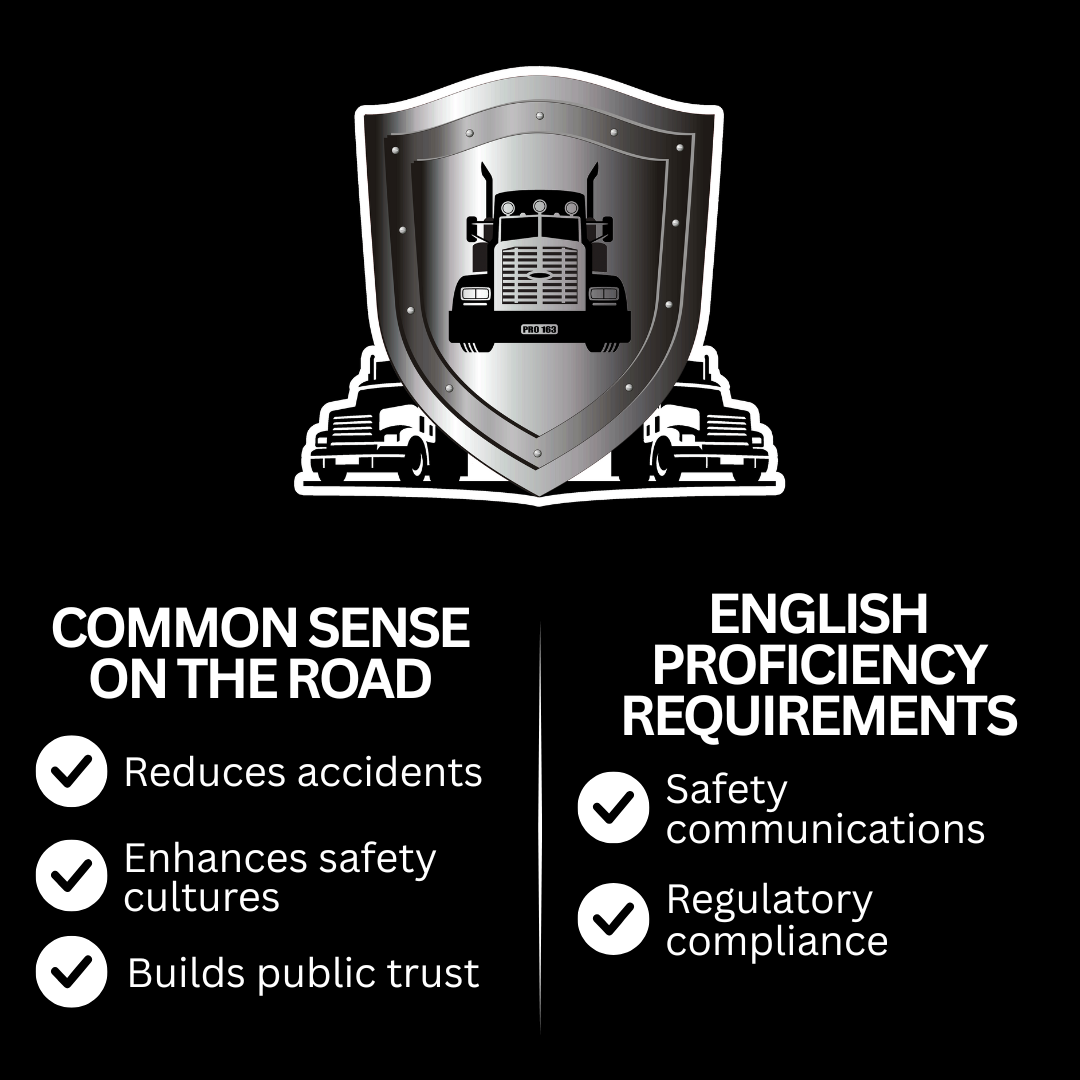
- Reduces accidents: Many collisions result from preventable mistakes such as fatigue, speeding, or distracted driving.
- Enhances safety culture: Emphasizing practical judgment encourages drivers to take personal responsibility.
- Builds public trust: Safer roads promote positive perceptions of the trucking industry.
What Motor Carriers Should Expect
Motor carriers are expected to play an active role in fostering these safe behaviors:
1. Reinforced Training and Education
Ongoing training will highlight the importance of practical, common-sense safety practices, including recognizing fatigue and maintaining focus.
2. Monitoring and Enforcement
Advanced monitoring tools, like telematics and dashcams, will be used to ensure drivers are adhering to fundamental safety protocols. Non-compliance with common-sense rules may result in disciplinary actions.
3. Clear Expectations and Policies
Carriers will communicate the importance of responsible driving, emphasizing that safety starts with individual judgment.
What Drivers Should Expect
Drivers are encouraged to embrace a safety-first attitude rooted in common sense:
1. Prioritize Safety and Responsibility
Avoid speeding, distractions, and fatigue. Simple, responsible decisions make a significant difference.
2. Supportive Enforcement
Expect constructive coaching and feedback aimed at improving safety habits rather than solely punitive measures.
3. Recognition of Good Judgment
Drivers demonstrating consistent responsible behavior may be recognized or rewarded, reinforcing a positive safety environment.
English Proficiency Requirements for Commercial Motor Vehicle Operators
In addition to safe driving practices, the Department of Transportation (DOT) emphasizes the importance of English proficiency for commercial drivers. Clear communication is essential for safety, compliance, and effective interaction with law enforcement and other road users.
Why English Proficiency Matters
- Safety Communications: Drivers often need to understand road signs, traffic signals, and safety instructions.
- Accident and Emergency Response: Effective communication is crucial in emergencies to coordinate responses and avoid misunderstandings.
- Regulatory Compliance: Proper documentation, logs, and reporting require proficient language skills.
What Carriers and Drivers Should Expect
- Assessment and Training: Drivers may undergo English language assessments to ensure they can read, understand, and communicate effectively.
- Ongoing Support: Employers will offer resources and training to help drivers improve language skills if needed.
- Compliance Standards: Drivers must meet the minimum English proficiency levels mandated by law to maintain their operating licenses.
Beginning June 25, 2025, ELP violations will once again be included in the out-of-service criteria—ensuring consistent, nationwide enforcement and reaffirming the Department’s unwavering commitment to roadway safety.
Final Thoughts
Both enforcement of common sense rules and ensuring English proficiency are essential for creating safer, more efficient roads. They reinforce a culture of responsibility, accountability, and clear communication—fundamental elements that benefit drivers, carriers, and the public alike.
By working together to uphold these standards, we can make significant strides toward safer highways and a more professional trucking industry. Remember, safety and communication are not just policies, they are values we must carry in every mile.